



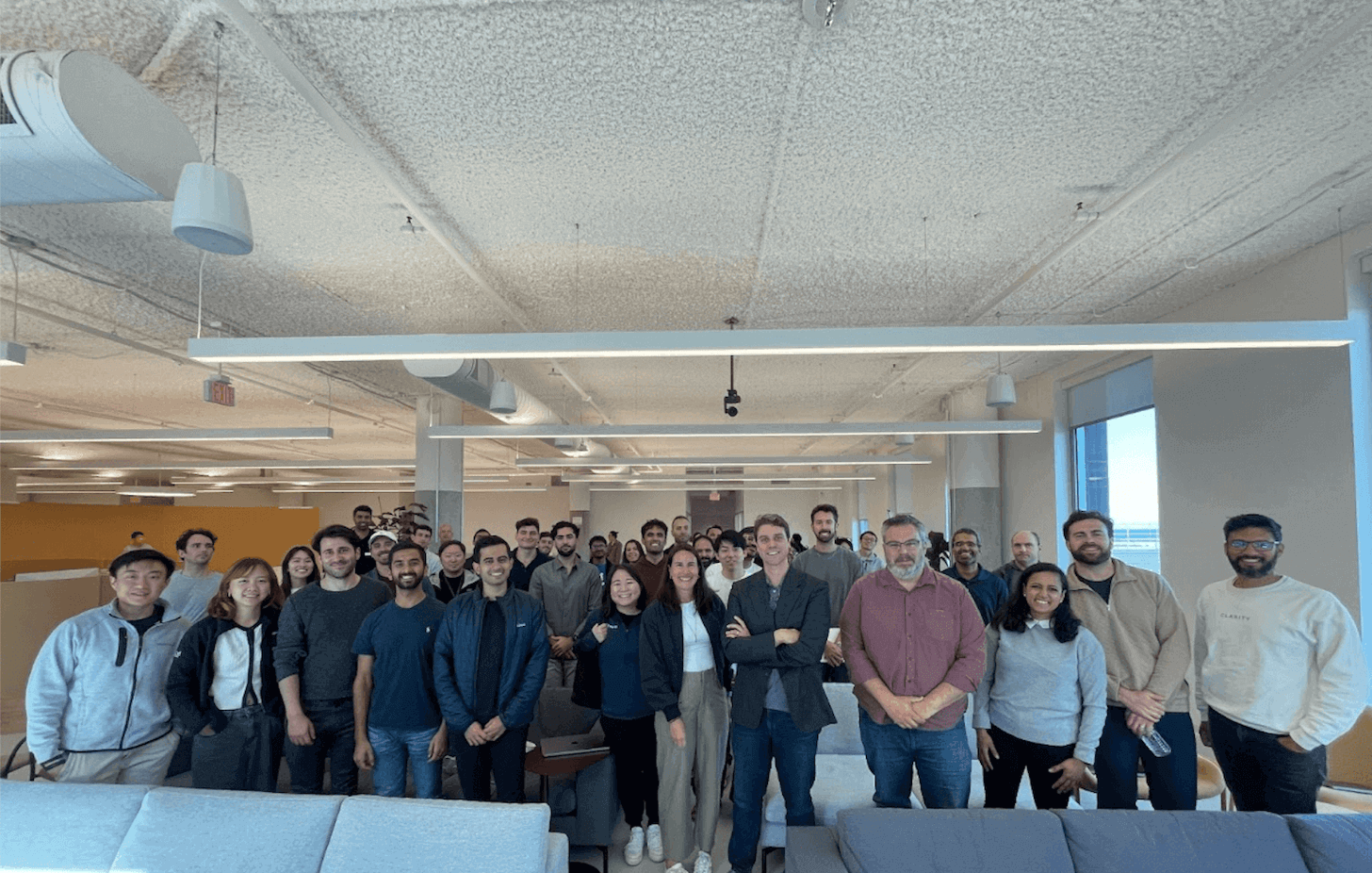
Two weeks ago, we kicked off the PearX S25 Speaker Series with Adam Evans, co-founder of RelateIQ and Airkit and now EVP & GM of Agentforce at Salesforce. Adam traced his journey from running a hosting company next to a cornfield in Champaign, IL (complete with llamas!) to leading two acquisitions by the same tech giant (Salesforce).
Below are 8 takeaways that founders can put to use immediately.
TL;DR
- Surf converging waves.
- Resourcefulness is a superpower until it isn’t.
- Early hires ≠ warm bodies.
- Culture scales through ritual, not memos.
- Avoid the “hero customer” trap.
- Scale GTM when the product can carry the weight.
- Acquisitions are emotional, not just financial.
- The next frontier in AI is tribal knowledge.

Surf converging waves.
Every breakout company that Adam helped build rode at least two simultaneous macro trends. RelateIQ timed the rise of Gmail OAuth and the push toward sales automation. Airkit capitalized on the self-service economy and GenAI tailwinds. Adam shared his rule of thumb: one macro shift can spark curiosity, but two or more create inevitability. This gives something for founders to think about. As you shape your own “why now,” stack trends in technology, regulatory change, distribution shifts, and cultural moments, until the opportunity feels almost unfair.
Resourcefulness is a superpower until it isn’t.
Adam’s earliest ventures were bootstrapped experiments powered by pirated Photoshop licenses and 3 a.m. coding sprees. Joining a venture backed startup later taught him that capital is a weapon, not a trophy in the bank, and that you can and should be more aggressive. Deploy dollars where they create asymmetry (like speed to market, feature breadth, and recruiting top talent). Resourcefulness gets you out of the gate, but capital wins the race.
Early hires ≠ warm bodies.
At RelateIQ, Adam interviewed 15-25 candidates each week and required a unanimous “yes” from the team before extending an offer. If they all gave a “yes”, the candidate would get an offer letter that same day, plus something personalized hand delivered that same night (like a custom gift basket). Your early hires set the foundation for the company. From what I’ve seen, that level of rigor is uncommon and yet allows you to create a tight group of people with specific hiring values and standards. So if you find yourself rationalizing a “good enough” hire, pause. The cultural cost will outlive any short-term productivity gain.
Culture scales through ritual, not memos.
Adam talked about nightly apartment crawls while at Palantir, which seemed like a waste of time to him. “I thought it was wasteful [but] actually this is a tax that you must pay…to keep the team more cohesive at that moment of relative exponential expansion.” Whether it’s Friday ping-pong or a founder AMA, put rituals in place that let both newbies and veterans absorb the company’s vision and values in different ways.
Avoid the “hero customer” trap.
This is a big one, and it keeps coming up in conversations I have with founders. Airkit’s $150,000 enterprise pilot validated the product but also trapped their product roadmap. Airkit’s MetLife deal had them bending over backwards for a single customer. For enterprise-focused founders, Adam advised anchoring contracts to tight scopes. I’ve seen that time and time again where a great enterprise logo completely derails the roadmap for an early stage startup. He strongly recommends saying no to custom work that only one logo will use, even when the numbers look irresistible. It’s hard, but your long-term growth depends on it.
Scale GTM when the product can carry the weight.
More experience is not necessarily better for startups, and I’ve seen how this plays out before. A seasoned CRO will arrive with a playbook requiring more AEs, SDR pods, and RevOps. That machine hums when you have solid win rates and payback periods, but typically it just drains capital and morale. Adam warned that senior sales leaders from late-stage companies may solve problems that you don’t have yet, so founders should stay on the front lines of sales until their sales motion is proven.
Acquisitions are emotional, not just financial.
When Salesforce wanted to acquire RelateIQ, bankers modeled an alternative path: five straight years of flawless execution could yield the same valuation. But the acquisition offered a badge of credibility for every employee, plus Salesforce’s distribution engine. Adam framed M&A decisions around emotion and positioning, not just spreadsheets and multiples, and I appreciate that counter-intuitive stance.
The next frontier is tribal knowledge.
Given Adam’s role at Salesforce leading all of Agentforce, I asked “If you were building a company today, what areas would you be excited to build in?” Adam started by saying that we’re all sort of building from the same LLMs and foundation models, which makes for a lot of common products. GenAI agents are only as powerful as the proprietary context they hold. Across companies, there are irreplaceable veteran employees who hold workflows in their heads. So the tools that extract, structure, and refine this knowledge represent a defensible wedge against commoditized LLMs, and that’s what Adam is most excited about. If you’re building in this space, Adam shared “that specific information for teams and companies and process, that’s an interesting little moat.”
From gift-baskets to apartment crawls, I left the session thinking about the practical and counter-intuitive wisdom that Adam shared.
Stay tuned for more PearX S25 Speaker Series recaps and keep an eye out for our next PearX accelerator cohort, applications open in late August.
Share


