
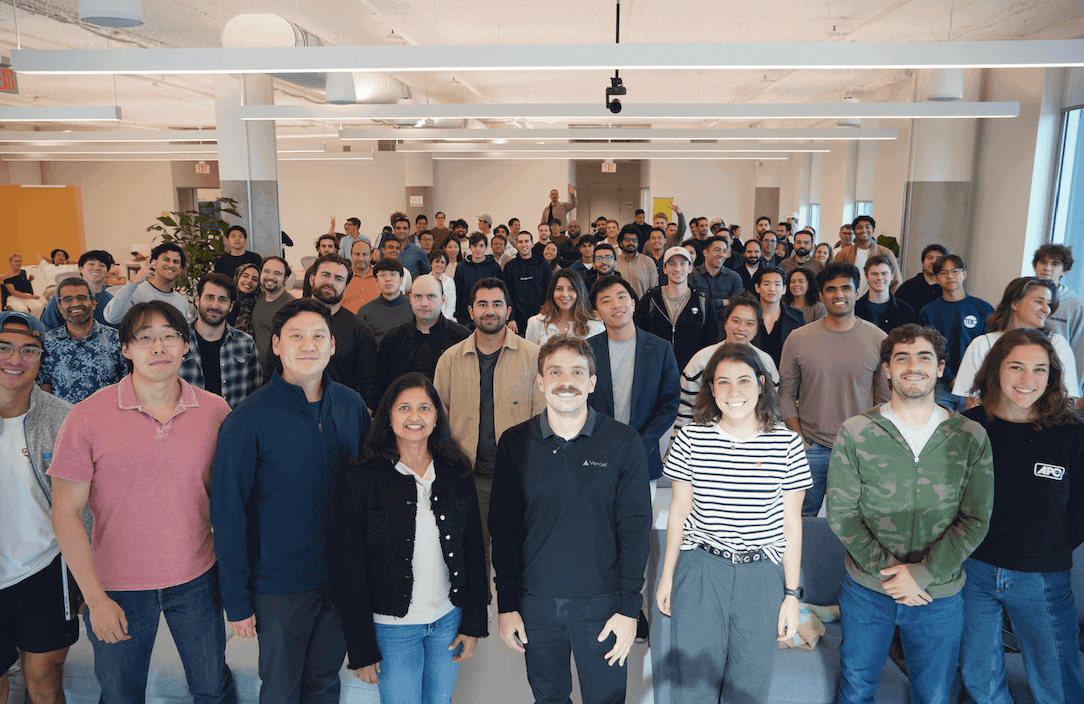
PearX S25 Speaker Series is off to a great start. We invited Guillermo Rauch, founder and CEO of Vercel, creator of Next.js, and one of the most influential voices in developer experience last week to come speak to our PearX S25 cohort and other founders in our community
Founded in 2015, Vercel is Series E funded and 600+ people strong. Vercel is the creator of the popular AI assistant v0. It also powers the front ends of companies like Adobe, Stripe, and Runway, and its React framework (Next.js) has 10.5m weekly downloads.
During the session Guillermo kept it very personal. He talked about coding in Argentina as an 11-year-old kid. He also shared more about building what he calls “the AI Cloud,” a platform for the internet’s next evolution–one built not just for humans, but for agents.
His talk, moderated by Pear advisor and current Vercel SVP of Product Aparna Sinha, was full of incredible advice.
Here are five that stood out:
1. You can’t fake taste
I’ve been thinking about taste lately. Everyone has access to the same AI tools, the same questions, the same answers. Where we truly differ is our taste, and that’s especially true when building at the earliest stages.
“How do I solve that fundamental catch-22? I’m two people, how do I build this [into] world class? And so I do think taste and focus are your friends.”
Guillermo made it pretty clear during the session: in a venture-backed startup, you’re not building a business but rather a company that has a lasting impact.
“We’re trying to create companies that people will remember. That’s the game that you get into when you create a venture-backed company. Because otherwise you just open a hot dog stand.”
Sure, you need to build fast. But it’s also about building something good and that means sweating the details.
“I always think about something that Steve Jobs said, which is that people don’t have time for BS. They don’t have time to remember all of the ins and outs, but you have to be so concrete, so simple. You’re almost repetitive, which is kind of annoying…you have to repeat yourself a lot.”
So what details are you going to sweat? That comes back to your distinct taste as a founder and what you deem important.
2. The web is evolving, are you?
Founders often think in terms of the current internet. Guillermo shared how he’s building for the next one. Just like HTTP became the standard protocol for how browsers interact with websites, MCP (Multi-Agent Communication Protocol) is being built as the protocol for how AI agents will communicate with each other.
“The internet as it exists until now has been mostly an interface to humans…but now there’s a new front end that’s emerging that is the front end for agents.”
Guillermo talked about the agentic web, a future where tools like ChatGPT aren’t just helpers but fully autonomous participants that call APIs, exchange data, and make decisions on behalf of users. This isn’t sci-fi. Vercel is already building the infrastructure to support it.
“MCP is like the new HTTP. It’s like the next kind of URL for agents.”
As you’re building your next breakout product, you’re going to need to optimize not just for human users but for machine interfaces too.
3. Iterate to greatness
Guillermo’s obsession with speed predates Vercel. At his previous startup Cloudup (acquired by Automattic, parent company of WordPress) he built a DIY platform to help teammates ship faster. The ideas and internal tooling around developer speed and deployment later inspired Vercel.
“How quickly you can push changes and validate them with customers was a huge part of our success.”
I couldn’t help but note the “validate with customers” point. Build quickly, sure, but also bring customers into the building process to make sure it’s what they actually want.
But the goal isn’t to ship quickly for the sake of it, it’s really to build a system where every release, every feedback loop, every change compounds into something great.
And speed isn’t just about your product, either. At Vercel, it’s a value that’s literally written into their culture.
“Iterate to greatness. That’s one of our values and it captures iteration and it captures our ambition. And we’re never done iterating, but we do believe that if we keep iterating, we’ll get there.”
Build the habit of fast improvement because greatness is the outcome of hundreds of iterations (combined with intention).
4. Open source: economic engine and moral choice
Guillermo’s passion for open source isn’t a clever branding tactic. It’s actually rooted in his own experience growing up in Argentina where access to tools was limited and expensive. Guillermo reflected on his early days learning to code in Argentina. He explained how limited access to proprietary tools and paid software made learning difficult, especially given the peso-to-dollar conversion rate. This personal experience is what drove his deep belief in open source, not just as a technical preference but as a moral and educational need.
“Just the idea of paying for a license just to learn seemed insane.”
While open source may seem at odds with big business, Guillermo argued the opposite:
“The world before open source was so upside down because…why would you not want everybody to learn your technology? Why would you not want to build a community of contributors?”
That mindset led to Next.js becoming the standard frontend framework for many of the world’s top teams and why Vercel’s newest AI tools like the AI SDK are also open source.
5. Storytelling is a startup survival skill
This comes up all the time when talking to successful founders like Guillermo.
It’s not enough to build a good product. Even with good tech, most AI startups won’t stand out unless they can connect emotionally to customers, investors, employees, and users.
Especially for technical founders, storytelling can be challenging so they might ignore it altogether. Guillermo’s advice:
“There’s a quote that I love by Don Valentine, the founder of Sequoia…he said, money flows as a function of the stories.”
Founders: your ability to tell a compelling story is just as important as your ability to build great technology. The way you frame the problem, your origin story, and the outcomes you envision, this is what sticks.
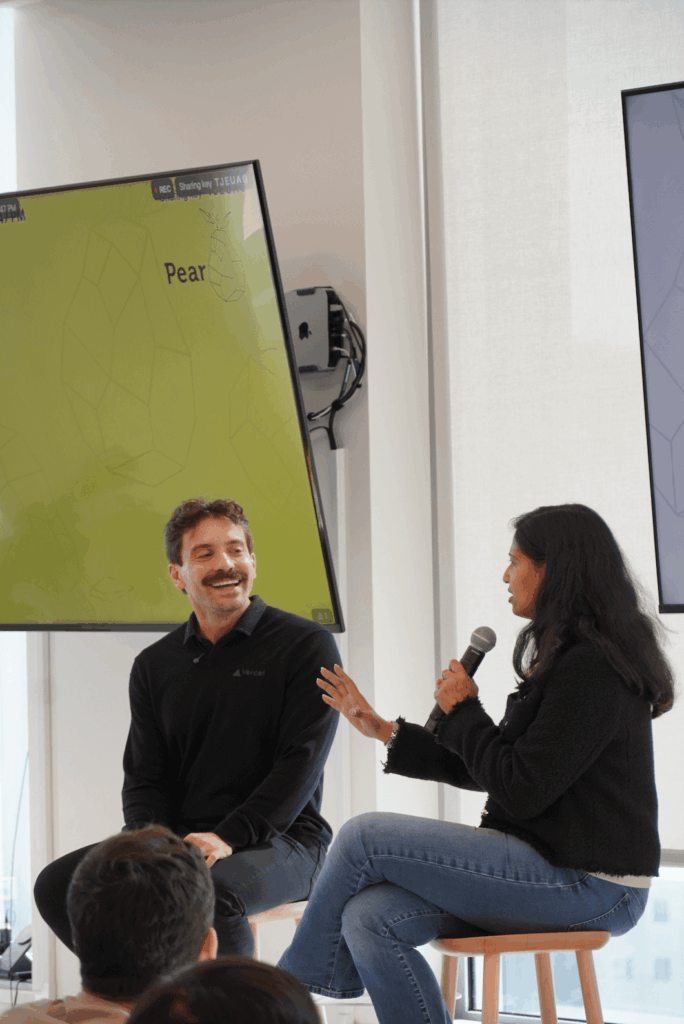
And that’s a wrap! From just a kid coding in Argentina to building a 600-person company that’s reshaping the web, Guillermo opened the hood and showed us how he works. We were lucky to get a rare glimpse into how one of the most product-obsessed founders thinks about AI, speed, culture, and taste.
Stay tuned for more PearX S25 Speaker Series recaps and keep an eye out for our next PearX accelerator cohort, applications open in late August.