
We are now accepting applications for PearX, our exclusive, small batch program for pre-seed companies. Apply to join our S26 cohort here.
AI didn’t make it easier to start a company. It’s made it easier to start a company that fails.
The cost of building has collapsed. A two-person team can ship in weeks what used to take a funded startup a year. But that’s the problem—so can everyone else. We see dozens of pitches every month targeting the same markets with near-identical products.
When everyone can build, building isn’t the advantage. Learning is. The speed at which you discover real demand, and the unique insight you extract from customers that no competitor has, is the only edge that compounds.
At the same time, the platform is swallowing the obvious plays. OpenAI is introducing forward-deployed engineers into the enterprise. Codex and Claude Code are commoditizing the act of writing software itself. If your moat is “we built an AI app,” you’re already competing with the labs.
So where does defensibility actually live? Deeper. In a first-principles understanding of customer pain and the actual workflows that shape daily behavior. These hard problems aren’t obvious from a laptop; they’re embedded in how work actually gets done, under real constraints, on spreadsheets, dispatch calls, and card swipes.
Take Piston, a PearX W25 company rebuilding the fuel payments network for last-mile trucking. Their founders didn’t start with a model. They started with 250 trucks and a fraud problem. Fleet fuel cards are skimmed constantly, fees are opaque, and managers wait days to see what their drivers actually spent.
Piston replaced all of it with QR code payments tied to vehicle, location, time, and fuel type, with AI models running against transaction history to flag fraud in real time. Today, they’re processing millions in annualized volume, growing 50% month-over-month. Not because they built faster than anyone else, but because two former fleet operators understood a workflow Silicon Valley wasn’t paying attention to and used AI to make it radically better.
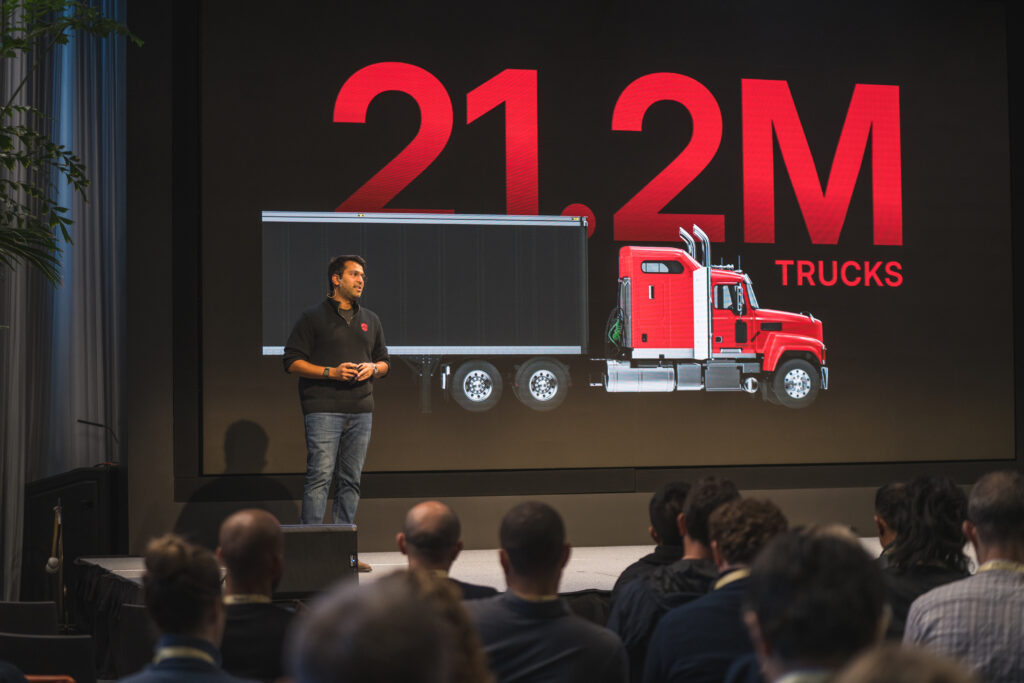
That’s the pattern we keep seeing. And it’s driving growth and adoption at unprecedented rates.
The best companies right now aren’t just building AI products. They’re embedding AI directly into the day-to-day workflows of industries that still operate with minimal and outdated software. And every deployment teaches them something their competitors can’t replicate.
That’s why PearX exists: to help founders learn faster in the real world and turn early insight into durable advantage
Today, we’re opening applications for PearX S26, our 12-week pre-seed program kicking off in July 2026. We encourage companies at the idea stage as well as teams already showing early traction to apply.
Why PearX
Our goal with PearX is simple: help founders get on the path to success as fast as possible.
PearX is intentionally small and hands-on. We work closely with founders to navigate those critical early decisions: customer discovery, product focus, positioning and messaging, hiring, and fundraising. That hands-on partnership helps founders learn faster, avoid costly detours, and build real momentum through the drunken walk of early stage company building.
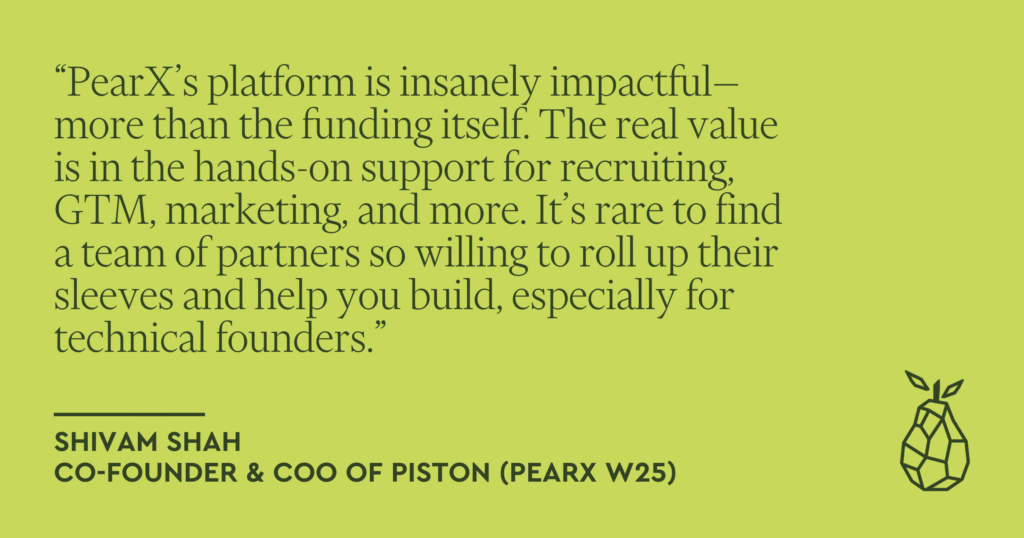
For over a decade, Pear has backed category-defining companies from the very beginning. We’ve invested in companies like Doordash, Affinity, Cardless, Federato, Nova Credit, Piston, Valar Labs, Viz.ai, Listen Labs, and many others—and we’re excited to partner with the next generation of founders building AI companies.
Join PearX S26
As a PearX company, you get $250K-$2M in funding, over $1M in cloud credits, and hands-on partnership from experienced founders and operators. You’ll join a small, highly curated cohort, and get deep support on recruiting, go-to-market, and fundraising. When you’re ready to raise, we’ll help you craft your story, meet top investors, and continue to support you beyond demo day.
If you’re interested in joining our S26 cohort, you can apply now at pear.vc/pearx-application.
Early applications submitted by February 22 at 11:59 PM PST can expect a decision by the end of March. Applications submitted by the regular deadline of April 12 at 11:59 PM PST can expect a decision by the end of May.