
Inside PearX is a series that gives a deeper look into our pre-seed accelerator. Applications for our Winter 2026 PearX cohort are closing this Saturday, September 13th at 11:59 PM PST.
We’re thrilled to announce that TrueMeter (formerly EcoTrove), a PearX W25 company, raised $4M in Seed funding led by Ulu Ventures, with participation from Pear VC, e2.vc, RiverPark Ventures, Flex Capital, Sarah Smith Fund, Cyan Ventures, Costanoa, Sand Hill Angels, and others. This brings their total funding to more than $5.5M.
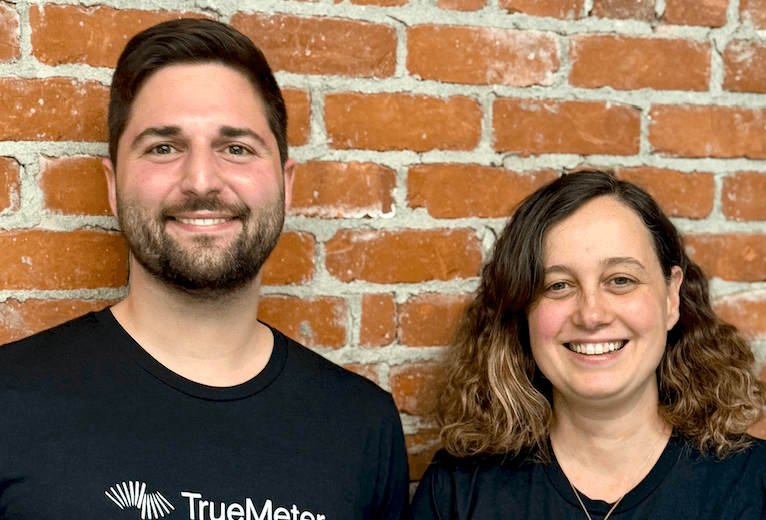
We recently sat down with Ozge Islegen-Wojdyla and Ali Sarilgan, co-founders of TrueMeter, to share more about their journey thus far. They share how being in PearX helped them refine their ICP, build a pipeline from scratch, and land their first enterprise customer.
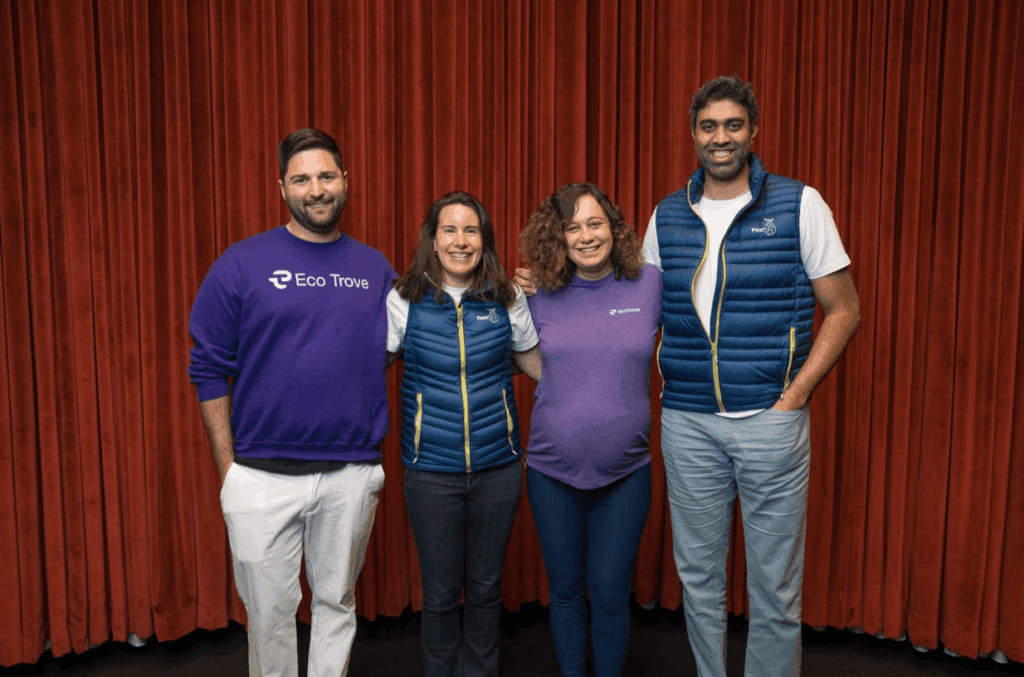
When Ozge and Ali joined the PearX W25 batch as Ecotrove, they had over 100 paying customers and were focused on selling to consumers. Two weeks into the cohort, in one of our weekly check-ins, they started sharing stories of how restaurants and shops were coming inbound to their product, wanting to use it.
During week three, they made the bold decision to pivot from a consumer company to focus on serving brick-and-mortar businesses.
What convinced them to make the move?
After more customer conversations and market analysis, it was clear that businesses felt the pain of high energy bills more acutely and were more excited about the impact that their product could have on their bottom line. The product was more of a painkiller for these customers. Businesses closed faster, spent more money on their power bills, and responded more strongly to the problem TrueMeter was solving.
Now TrueMeter serves hundreds of businesses, helping them save millions of dollars on their power bills with zero capital investment or operational lift. This drives meaningful savings for business owners and enables them to focus on their core business instead of their energy bills.
Below is a recap of a recent conversation we had with Ali and Ozge about their founder journey thus far.
Can you tell me more about what you’re building?
Ozge: We’re building the default platform for brick-and-mortar businesses to pay for power. Our AI energy manager guarantees 10-15% savings on power bills, and we offer flat monthly pricing with no capital investment required. Our customers are typically multi-location businesses like restaurants, retailers, and even warehouses that operate across states and utilities. We manage all of it through one subscription, paying their bills, auditing utilities, finding cheaper rates, and implementing cost-saving measures continuously.
Ali: Imagine you’re the CFO at GameStop. You’re told to cut costs. Rent and telco are easy, maybe you have a few vendors. But energy? You might have 4,000 different utilities. No CFO has the time or tools to optimize that. How do I even read the bill? What did I even pay? That’s where we come in.
What were these businesses doing before TrueMeter?
Ozge: They were either hiring expensive consultants, using bill pay agencies that didn’t find savings, or getting one-time recommendations that never got implemented. In many cases, they were managing their bills manually and logging into dozens or hundreds of utility portals every month.
Ali: In one case, a customer thought they were spending $X on power. We reconciled it and found they were off by $1 million! We provide visibility and predictability that CFOs just didn’t have before.
How’d you learn about PearX?
Ali: We both went to Stanford and a few of the Pear partners teach there, so it was a pretty organic connection. On a more personal level, there was something kind of serendipitous. One of my first jobs in high school was selling rugs at a bazaar in Istanbul, and I found out that Pejman, one of Pear’s founders, had a similar story. So there was this neighborly connection between Turkey and Iran, between two former rug sellers who found their way to Silicon Valley.
What was your original idea before PearX? Did it change?
Ozge: We actually started with a consumer product (flat-rate energy subscriptions for homeowners). But Pear pushed us to listen more closely to the market and clarify our ideal customer profile. That led to our pivot into B2B, where the pain was bigger and the unit economics made way more sense.
Ali: With consumers, we were creating the wrong incentives. If you’re a homeowner and we tell you, hey, whatever you use, it’s the same fixed monthly price for power, you’ll probably start mining Bitcoin. You’ll probably run the AC. You’ll stop caring about your energy efficiency. Businesses, on the other hand, use power predictably. And we also came from that world. Ozge from energy markets and Instacart, me from enterprise and consulting. Once we realized that, the switch became obvious.
How did Pear support that pivot?
Ali: So when we applied to PearX, we had about 100 residential (B2C) customers. Our entire revenue was coming from them. Once we kicked off, they told us “in three months you’ll go to Demo Day, you’ll try to raise a round, grow the numbers as fast as you can during these three months.” And I think it was our second week where we told them we actually want to kill this entire business and go back to zero revenue to start over. And they were surprisingly supportive.
Ozge: They also introduced us to our first enterprise customers. The weekly check-ins created urgency and helped us track the right KPIs. Those check-ins weren’t just status updates, they were strategy sessions.
How did Pear help with your hiring efforts?
Ozge: Nate Hirsch (talent lead for PearX) was amazing during our search for a Chief of Staff. He helped us define the role, understand market benchmarks, identify the right profile for our stage, and ultimately introduced us to the person we ended up hiring. As founders, we don’t have time to run a full recruiting process so having that strategic support made a big difference and we’re really happy with the hire.
What resources from PearX did you find most valuable?
Ozge: The cohort itself was incredible. High-caliber, thoughtful founders we got to know during the three days at Camp Pear and throughout the program. And then we kept meeting with them through our weekly meetings and on Slack, talking about the progress of our companies. We’ve bonded and still stay close to this day. Pear provided access to their partners who have expertise in a wide range of topics like GTM, hiring, and engineering. They also held regular workshops with successful founders so that we could see the best examples in the market and get their advice.
What’s your go-to-market strategy?
Ali: Our pitch is simple. We’ll lower your power bill by at least 10% and we won’t ask you to do anything. That’s resonating. So now it’s all about gaining visibility. Throughout this year we’ve made some strides on our outbound motion. Now we’re placing big bets and investing in inbound (content, SEO, a rebranded website, and thought leadership).
How would you describe PearX to another founder?
Ozge: I’m regularly recommending PearX to other founder friends. The breadth and depth of their expertise, how they’re super hands-on and available to brainstorm with us whenever we need a second opinion.
Ali: It’s the rare program where you can restart your business at week two and instead of panic, you get support and introductions.
—
Thank you, Ozge and Ali! Huge congrats on the Seed announcement and looking forward to more milestones in the future.
We’re excited to spotlight more bold pivots, big bets, and breakthrough ideas from our founders, each building toward a more efficient and resilient future. Stay tuned for more stories Inside PearX. Applications for our W26 cohort are due Saturday, September 13th at 11:59 PM PST. Apply now.