
When Dimitri Dadiomov co-founded Modern Treasury in 2018, he didn’t set out to become a founder. He was just frustrated.
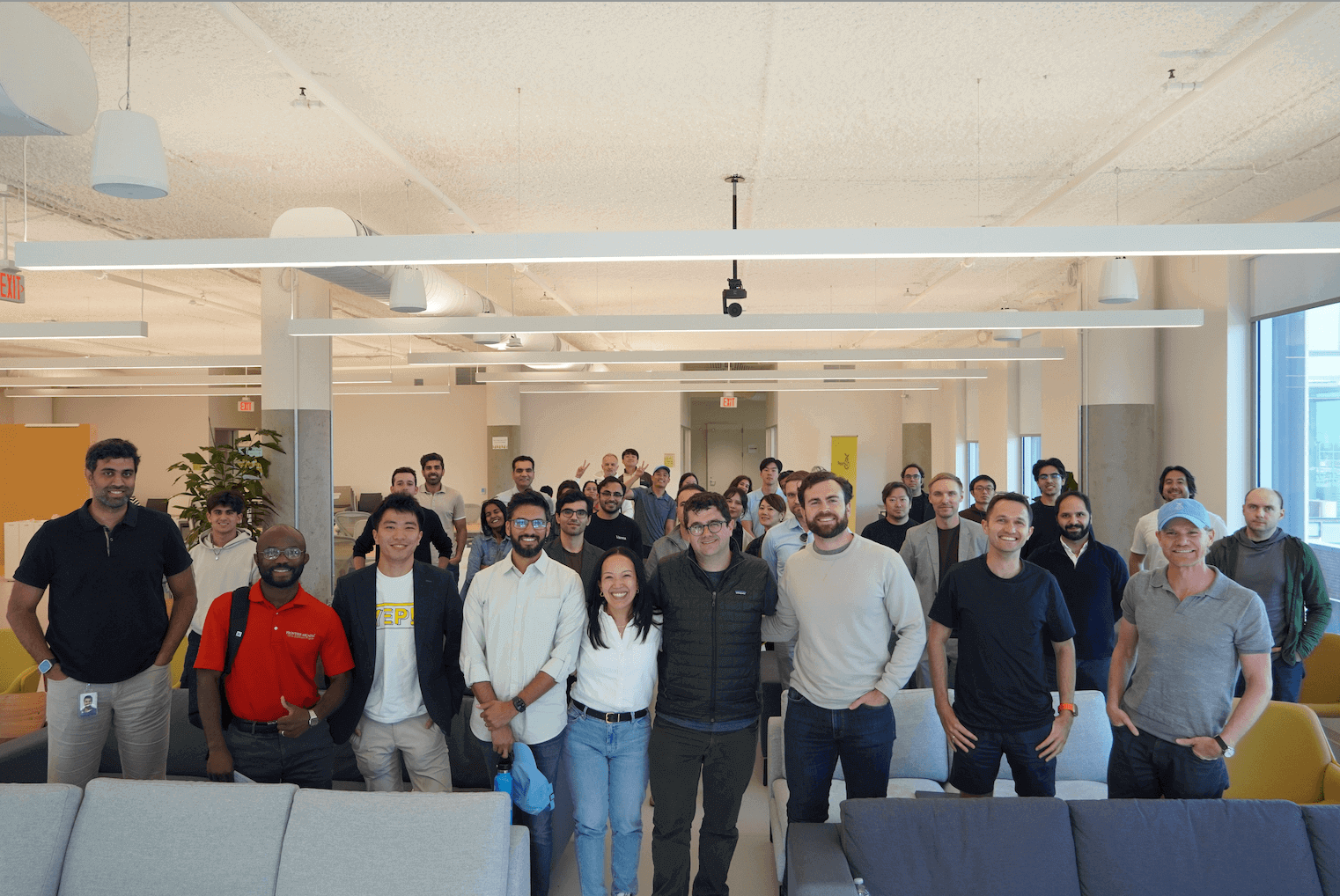
I sat down with Dimitri at our latest PearX S25 Speaker Series event to learn more about his story.
“We were working at LendingHome,” Dimitri explained. “We had this meeting every Wednesday that I just hated… everybody in the company who had to deal with capital markets or payments or accounting or customer service… would come to these meetings with bank statements, highlighted in yellow, being like, ‘what was that’?”
Dimitri decided to visit companies like Airbnb, Uber, Coinbase, and Gusto to see how they solved the problem. Instead of a product, they invited him to lunch with their 200-person payments engineering teams offering to hear about what they had built. “That just felt…crazy to me. They all needed the same thing”
While credit card infrastructure was well served at the time by players like Stripe and Braintree, ACH and wire transfers were another story. The developer infrastructure didn’t exist. So Dimitri and his two cofounders Matt and Sam decided to build it.
Modern Treasury (Series C, 150+ people) is now the backbone for how companies like Gusto, ClassPass, Procore, Navan, and others move money. From a packed session, these five insights stole the show.
1. Rage-founding is a feature, not a bug.
Building Modern Treasury wasn’t the result of brainstorming. It was what Dimitri calls “rage founding,” the kind of business you build when you’re so frustrated by a problem you can’t believe no one has solved it yet.
“For those of you who probably have some problems that you’ve dealt with in past jobs or in your personal life that you were…super pissed off about, there’s a good chance other people are kind of annoyed about them…That’s…what the rage founding comment was about.”
If you’re deeply frustrated by a problem in your own workflow, odds are others are too. Rage can be the start of a real category.
2. If there’s no category, that might be your edge.
At Seed stage, Dimitri and his co-founders built for a pain point they had felt deeply. But when Modern Treasury went on to raise their Series A and B, they hit a problem many founders face: investor segmentation didn’t match the company’s identity.
“We were not really a fintech company in a sense. We were a software company,” Dimitri explained. “The people who were true FinTech investors kind of didn’t get it.”
The product served financial tech companies, but it wasn’t one itself. Instead of forcing a category fit, Dimitri leaned into the ambiguity and focused on finding investors who understood the problem deeply, even if they didn’t come from the expected sector.
3. Keep the lessons casual
During the pandemic, Modern Treasury’s team went from 13 people in one office to 75 people spread across time zones. With everyone locked down and Zoom fatigue setting in, Dimitri and his team stumbled into a surprising way to get people together and learn: informal, founder-hosted coffee breaks with customers.
“We started inviting our customers. And we’d have a customer come and tell us, here’s what we’re building, here’s where Modern Treasury fits in. It wasn’t a super formal thing, but it became a tradition.”
This tradition had two lasting impacts: 1) it made the dreaded Zoom happy hour a useful and fun thing to attend 2) it emphasized the lesson that all founders want their teams to learn: you need to be obsessed with your customer.
These moments were unrehearsed and casual but they became an important way for people to gather and learn. The popular podcast Acquired even came by to tell the story of Acquired – and released it as an episode back in 2021.
4. Build your role around what energizes you.
Founders often get stuck doing the jobs they’ve grown into, not the ones they’re most energized by. Dimitri is doing the opposite. After seven years as CEO, he stepped down to become President and focus full-time on product again.
“There’s a new…set of products that we want to go build. And I was really excited about doing them…I don’t really get as much energy from the administrative part of the CEO job.”
The move wasn’t a crisis, it was intentional. “I’m not burnt out. I don’t feel like I’m… running away from something, but I also don’t care about [being CEO] as much as I care about building products I want to work on. And I wanted Matt [co-founder] to go have that CEO experience.”
Dimitri’s advice to other founders: make space to do the work that gives you energy, and check in with your co-founders regularly. What drained them two years ago might fuel them today.
5. Don’t sweat pricing, just make it work.
One of the most valuable pieces of advice Dimitri offered founders: don’t stress about monetization in the early days.
“Don’t worry about pricing…we were really worried about pricing early on and it’s…completely irrelevant. Like whether your first-time customers pay you $5, $50, $5,000…doesn’t matter in the long scheme.”
What does matter? Charging something, anything, to get signal.
“They gotta pay something. If they’re paying nothing, you get really bad feedback…But don’t overdo it. Your first customer is actually giving you a gift. Your product sucks and just own it.”
Dimitri also cautioned against complex pricing models: “Don’t do usage-based pricing or something stupid that means you’re going to spend half your time figuring out the billing system.”
Personally, I’ve seen one too many startups struggle because they overcomplicate their initial offering and confuse potential buyers so this advice really hits.

Dimitri gave us an unfiltered look at building a company in a category that didn’t exist, how to navigate that ambiguity, and pivoting roles without the ego. He’s now back in product mode and our audience was excited about the sneak peek of what’s next at Modern Treasury. If you’re interested in access to more raw founder conversations, check out some of our upcoming events, like our upcoming Speaker Series with portfolio founder Josh Reeves, CEO of Gusto.
Stay tuned for more PearX S25 Speaker Series recaps and keep an eye out for our next PearX accelerator cohort, applications open in late August.