



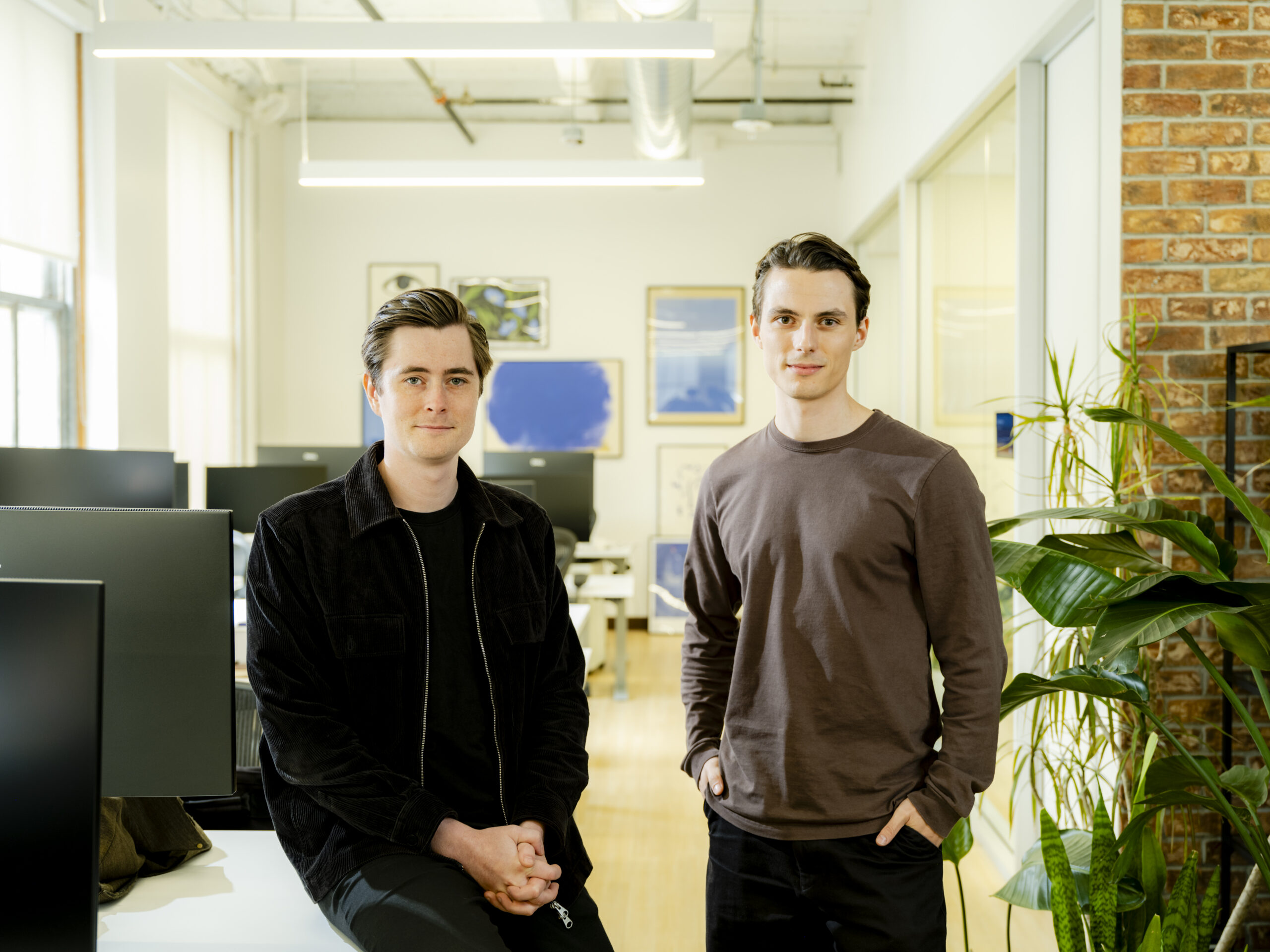
Some companies make you proud because of the outcome. Others make you proud because you had the privilege of watching the whole journey. Today, I’m incredibly excited to share that Listen Labs is joining Salesforce. For Mar, me, and all of us at Pear, this is a special milestone.
We first met Alfred Wahlforss and Florian Juengermann in January 2023, when they were working on an AI avatar product. The company and product would evolve significantly from there, but even in those earliest meetings, a few things were obvious. Alfred wanted to build a category-defining company and had an unusually high bar for people and product. Florian was an exceptional technical founder who could turn advances at the frontier of AI into products that felt fast, polished, and almost magical.
The product would change. Those things never did. We knew we wanted to work with them. Pear partnered with Alfred and Florian at the ground floor and subsequently invested in Listen at Seed, Series A, and Series B.
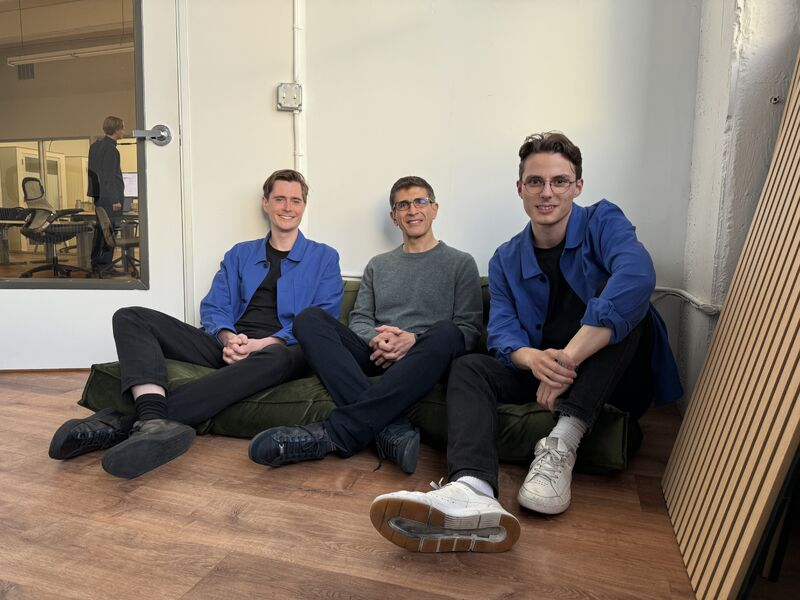
Partnering at the ground floor.
What followed has been one of those startup journeys that reminds me why I love early-stage investing: meeting exceptional people before the path is obvious, watching them discover a fundamental problem, and then seeing them iterate their way toward something much bigger than what they originally set out to build.
The insight behind Listen
The problem Listen attacked sounds simple: Companies need to understand their customers.
This is hardly a new idea. Great companies have always been customer obsessed. The products and brands we love are built through thousands of iterations informed by understanding what people want, what frustrates them, what excites them, and why. I saw the importance of this firsthand during my time at Facebook. UX research was one of the core functions in the product development process because it brought something that data alone could not: the texture of what people were actually experiencing.
But historically, getting that understanding has been surprisingly difficult. Qualitative research gives you depth. A great interviewer can probe, follow an unexpected thread, notice uncertainty, and uncover the reason behind an answer. But qualitative research is difficult to scale. Recruiting participants, scheduling conversations, conducting interviews, analyzing them, and synthesizing the results can take weeks or months.
Quantitative research solves part of this problem. Surveys can reach thousands of people and produce statistically useful results quickly. But something important gets lost. You may know that a number moved. You may not understand why.
Listen realized that advances in AI could collapse this tradeoff. Instead of choosing between depth and scale, why couldn’t you have both? An AI interviewer can adapt a conversation in real time, probe more deeply when something interesting emerges, and conduct many interviews simultaneously. AI can then synthesize those conversations, identify patterns, preserve the underlying customer voices, and allow a researcher or executive to move seamlessly from the high-level finding all the way down to an individual conversation.
Suddenly, talking deeply to 1,000 or 5,000 people starts to look less like an enormous research project and more like something a team can simply decide to do. That is a profound change.
When the cost of listening falls, companies listen more
One of the most interesting things about technological progress is that when the cost of something falls dramatically, demand often doesn’t stay constant. It expands.
We believed the same thing would happen with customer research. If talking to customers becomes 10x or 100x easier, companies don’t simply run their existing research projects more efficiently. They begin asking questions they previously wouldn’t have bothered asking.
A product team can test an idea before committing engineering resources. A marketer can understand why a message is resonating, or isn’t. A CEO can ask customers a question on Monday and have a rich picture of the answer later that week. An investor can speak with a large group of real consumers as part of diligence instead of relying on a handful of anecdotal references. The cadence changes.
Instead of updating your understanding of your customer once a year or once a quarter, you can update your priors every month, every week, and eventually continuously. The easier it becomes to listen, the more companies will listen. That is where we believed the real opportunity was.
From a research tool to a human insights layer
When we first wrote about Listen, we described the company as becoming the “human insights layer” that enterprises could not afford not to have.
Over time, our conviction in that idea grew. Listen wasn’t just making individual research projects faster. Every conversation could become part of an accumulating body of knowledge: what customers said, what they wanted, what changed, which issues kept appearing, and how different audiences thought about the same product over time.
That begins to look less like a research tool and more like an observability system for the customer. Software engineers would never operate a complex production system without observability. They need to know what is happening, identify when something changes, investigate why it changed, and respond.
We believe companies increasingly need the same capability for their customers. Listen has been building that layer.
Why this matters even more in the AI era
There is a second reason we became increasingly excited about the company. AI is dramatically increasing the speed at which organizations can act.
Software can be built faster. Campaigns can be created faster. Products can be changed faster. And increasingly, autonomous agents will make and execute decisions without waiting for every step to be approved by a human.
That creates enormous leverage. It also creates a new requirement. If your organization can act at machine speed, your understanding of the real world cannot operate on a six-month delay. The faster the machine becomes, the more important the feedback loop becomes.
Customer truth is that feedback loop. We believe the winning AI-native companies will not simply be the companies with the most automation. They will be the companies whose automated systems remain continuously grounded in reality, in what customers actually say, think, feel, and do.
This is why we ultimately saw Listen as infrastructure for an AI-native enterprise rather than simply another market-research product.
The team, and when it became personal
Of course, a thesis is only as good as the people executing it. Watching Alfred and Florian build Listen has only increased our admiration for them. Alfred has shown an extraordinary ability to recruit exceptional people, delegate as the organization has grown, and stay focused on the highest-leverage problems. Florian and the technical team have repeatedly incorporated advances in voice AI, large language models, and agentic systems while maintaining a relentless focus on the end-user experience.
And together they built with remarkable speed.
But one of my favorite validations of the team came from much closer to home. Around the Series B, Mar’s son Isaac joined Listen as an engineer. He had joined only a week before the round was announced, but he already knew he had found something special. Isaac had one non-negotiable in choosing where to work: he wanted to be surrounded by the highest possible density of exceptional people. He chose Listen. Mar joked that while Pear had been one of Listen’s first investors, having her son join the company was her “biggest investment to date.”
There is something particularly meaningful about that. As investors, we can talk endlessly about founders, markets, products, and talent. But when someone you love chooses to spend their own time and an important part of their career with a team you backed, the conviction becomes very personal.
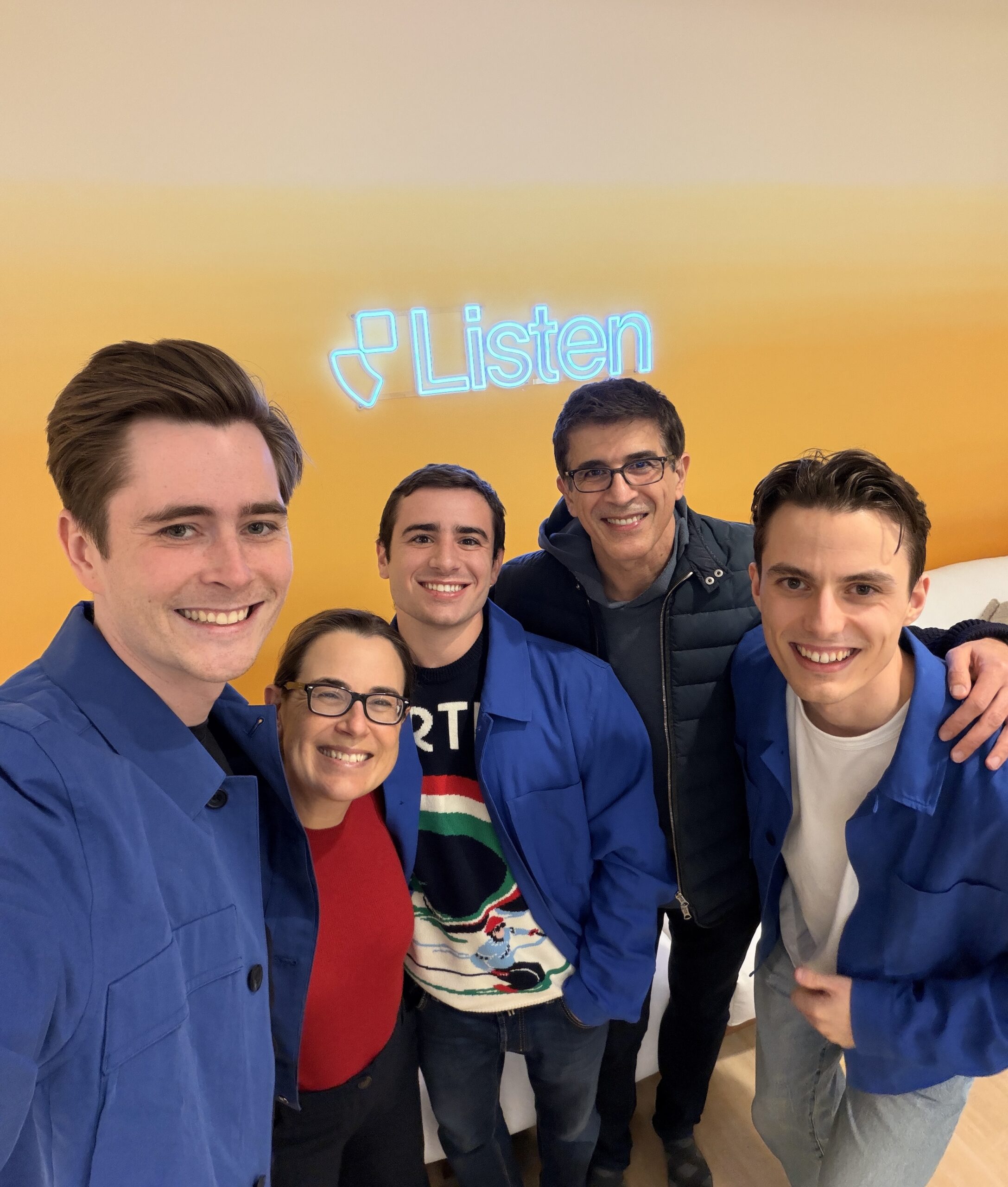
By the Series B, the partnership had become personal in a whole new way.
Within months of launch, Listen was being used by major enterprises, had conducted more than a million interviews, and had grown annualized revenue 15x in nine months. Those numbers are impressive. But what impressed us more was how consistently the team kept raising its own bar.
In some ways, Alfred and Florian built Listen according to the same principle their product gives its customers: listen deeply, learn quickly, and keep iterating.
The next chapter
An acquisition is sometimes described as the end of a startup journey. I don’t think that is the right way to think about today.
The idea at the center of Listen, that every important decision should be grounded in a deep understanding of real people, is much larger than one product or one chapter of a company. And that is part of what makes Salesforce such an interesting home for what Listen has built.
Salesforce has spent decades helping companies understand and manage their relationships with customers. As AI and agents increasingly become part of those relationships, we believe the ability to understand not just what customers do, but why they do it, will become even more important. Listen brings that human signal. The opportunity is to connect the speed and scale of AI with something deeply human: the ability to listen.
I’m incredibly excited to see what Alfred, Florian, the Listen team, and Salesforce build together. For Pear, it has been a privilege to partner with Listen from the earliest days. Those are the moments we live for as seed investors: meeting exceptional people before the path is obvious, helping wherever we can, and then watching them turn an insight into something that changes how an industry works. From sitting on the ground together in those early days to watching the company enter this next chapter, it has been an extraordinary journey to be part of.
Alfred, Florian, and the entire Listen Labs team: congratulations. Thank you for letting Mar, me, and all of us at Pear be part of the journey from the beginning. We could not be prouder.
Share


